

By Rob Whittet, Agency Partner | CO License #342852
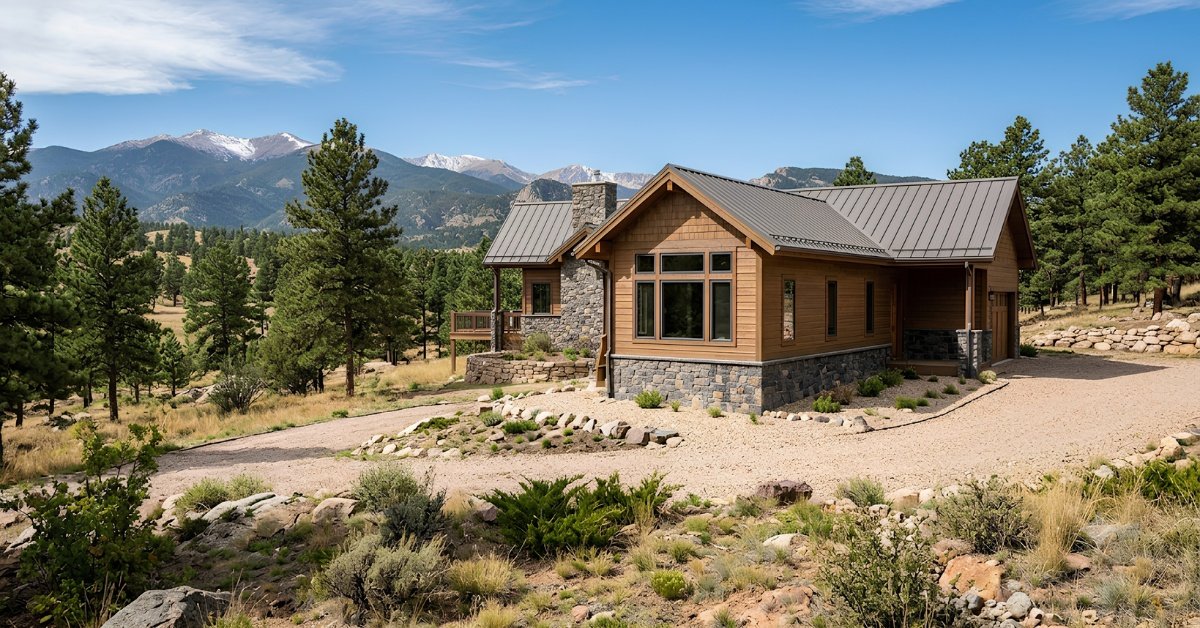
Colorado homeowners in high fire risk foothill areas can still get coverage in 2026, through admitted carriers offering mitigation credit, surplus lines carriers, or the Colorado FAIR Plan as a last resort, but the approach that worked five years ago no longer does. If you own a home in the Colorado foothills or anywhere near the wildland-urban interface, the homeowners insurance market you are navigating in 2026 is fundamentally different. Premiums have increased sharply. Admitted carriers have reduced or eliminated their appetite for high fire risk zones. Non-renewal notices have become common for homeowners with spotless claims records.
This post covers why the market shifted, what your actual options are, what a non-admitted surplus lines policy means in practice, how Colorado’s new wildfire laws change the conversation, and what mitigation work does and does not guarantee. It is written specifically for foothill homeowners in Jefferson, Clear Creek, Boulder, Gilpin, Teller, and Douglas counties, alongside families across the greater Denver metro area, who want to understand this market before they find themselves in a placement crisis.
Why Admitted Carriers Have Pulled Back From Colorado Fire Zones
Standard homeowners insurance is written by admitted carriers — insurers licensed and regulated by the Colorado Division of Insurance. These carriers operate under rate and form filings that DORA reviews and approves. They are subject to consumer protections governing how they can price, cancel, and non-renew policies.
For the better part of the past decade, admitted carriers writing Colorado homeowners insurance have faced a sustained mismatch between the premiums they collect and the losses they pay.
The Marshall Fire of December 2021 accelerated that reckoning. The most destructive wildfire in Colorado history burned through Boulder County neighborhoods most people did not consider high wildfire risk — suburban and semi-urban areas with mature trees and older construction, not remote mountain cabins. The fire destroyed more than 1,000 homes and produced insured losses exceeding $2 billion. It forced carriers to reconsider their wildfire exposure models across the entire Front Range, not just traditional high-elevation zones.
The result has been rate increases, tightened underwriting criteria, and in some cases complete withdrawal from writing new policies in wildfire-adjacent Colorado locations. Average Colorado homeowners insurance premiums have increased approximately 130 percent over the past decade and now rank among the highest in the nation.
What Surplus Lines Coverage Actually Is and When It Applies
When an admitted carrier declines to write a policy on a Colorado property, the next tier of the market is non-admitted carriers operating through the surplus lines system. This is a common source of confusion, so it is worth explaining clearly.
Surplus lines carriers are not unregulated. They are insurers that have not obtained a standard Colorado license, which means they are not subject to DORA’s rate and form filing requirements. That regulatory flexibility is precisely why they can write coverage that admitted carriers will not. They can price risk more granularly, apply underwriting criteria that would not pass DORA review for an admitted carrier, and structure policy terms to fit unusual risk profiles.
Working with surplus lines is legal, common, and for many Colorado foothill homeowners, the practical reality of maintaining coverage on their property. None of that makes it a wrong choice. It makes it a different choice with trade-offs that a homeowner should understand clearly before signing. A personal umbrella policy can also be layered separately to extend liability protection beyond whatever base homeowners coverage the primary policy provides.
The Role of Mitigation in Getting and Keeping Coverage
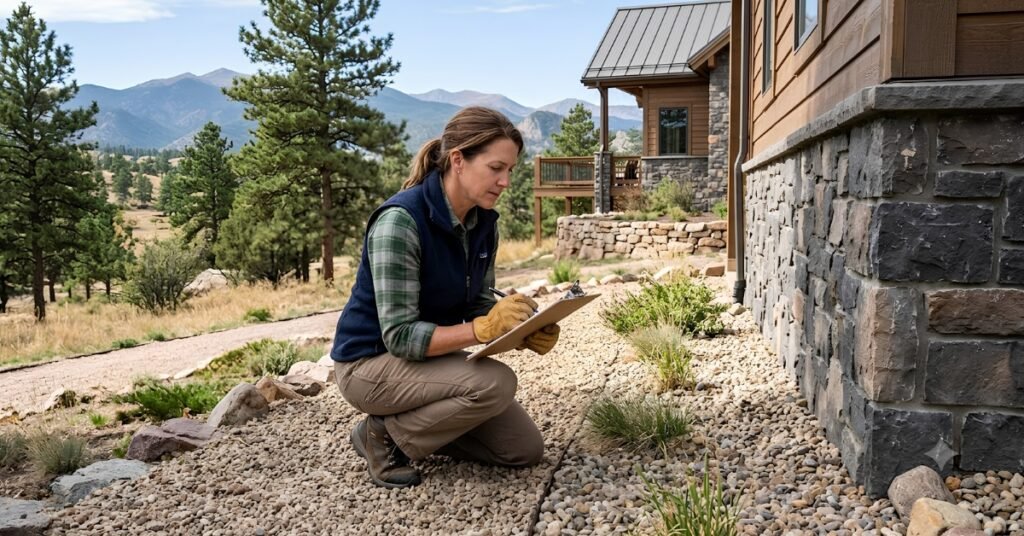
The single most actionable thing a Colorado foothill homeowner can do to improve their insurance options is document and maintain property-level wildfire mitigation. This has always mattered to underwriters. Colorado House Bill 25-1182, signed in May 2025 and effective July 1, 2026, has given it legal weight.
Under HB25-1182, carriers that use wildfire risk models must now incorporate documented property-specific mitigation into those models. If a carrier does not incorporate mitigation at all, it must provide premium discounts to homeowners who document qualifying mitigation efforts. Homeowners have a right to appeal a wildfire risk score they believe does not accurately reflect their property.
Colorado also adopted new wildfire resiliency building codes in 2025, with local governments directed to implement them by July 1, 2026. According to research by Headwaters Economics, building to wildfire-resistant standards costs approximately 2.7 percent more than traditional construction in the Intermountain West — a relatively modest premium for a meaningful reduction in risk and a documentable basis for better underwriting treatment.
The mitigation framework most underwriters use when evaluating a Colorado high fire risk property is organized into three defensible space zones.
| Colorado Wildfire Defensible Space Zones — What Underwriters Look For | |
|---|---|
|
Zone 0
0 to 5 feet
|
Immediate Zone — Highest underwriting weightRemove all combustible materials from the structure’s immediate perimeter: no wood mulch, no dead vegetation, no stored firewood, no untreated wooden decking. Install ember-resistant venting on soffit and fascia openings. Zone 0 is where most home ignitions from wildfires begin — embers land and find fuel. This zone carries the most weight in carrier risk scoring. |
|
Zone 1
5 to 30 feet
|
Lean, Clean, and Green ZoneMaintain grass at three inches or shorter during fire season. Space trees so canopies do not touch; remove lower branches to at least six feet above ground. Group shrubs separately from trees. Eliminate continuous fuel paths leading from the natural landscape to the structure. Document with dated photographs. |
|
Zone 2
30 to 100 feet
|
Reduced Fuel Zone — Extended where property allowsReduce fuel density throughout. Space trees and shrubs well. Remove dead and dying vegetation. This zone slows a fire’s approach and reduces ember production, which is the primary ignition source for structure fires during wildland events. Where property size allows, extending Zone 2 to one hundred feet or beyond meaningfully improves risk scoring. |
The mitigation elements that carry the most weight with underwriters in the current Colorado market: roof age and material (Class A assembly, preferably within fifteen years), Zone 0 documentation with photographs, defensible space records, proximity to a fire station with an adequate fire department response rating, and a formal wildfire mitigation assessment from a certified fire mitigation professional.
The Colorado FAIR Plan: Understanding the Last Resort
The Colorado Fair Access to Insurance Requirements Plan launched in April 2025 after being created by the state legislature in 2023. It exists specifically for Colorado homeowners who cannot find coverage in the private market after demonstrating denials from at least three private insurers.
The FAIR Plan is also more expensive on a per-dollar-of-coverage basis than comparable private coverage. It is the insurer of last resort in the precise meaning of those words: it provides a coverage floor when all private options have been exhausted. For a homeowner with a mortgage, it prevents a forced-place situation. It should not be treated as a starting point. A homeowners insurance coverage review with an independent broker who can access the full market, including admitted, surplus lines, and specialty carriers, should always come before the FAIR Plan.
What Independent Broker Access Means in This Market
A direct approach to any single carrier gives a foothill homeowner access to that carrier’s appetite, pricing, and underwriting criteria only. If that carrier has restricted or eliminated its Colorado wildfire zone writing, the answer is no and the homeowner starts over with the next call.
An independent broker working in the Colorado high-risk homeowner market has active relationships with admitted carriers that still have appetite in moderate-risk zones, access to the surplus lines market and specialty carriers that do not sell direct, current knowledge of which carriers have opened or tightened their Colorado position recently, and the ability to structure bundled home and auto coverage that sometimes improves admitted carrier eligibility compared to standalone home placement.
“When a property is borderline for an underwriter, how the submission is structured matters as much as the property itself. That is the broker’s job — and it is the difference between coverage and a FAIR Plan application.”
— Rob Whittet, Agency Partner
Frequently Asked Questions
Why is my home insurance so expensive in the Colorado foothills even if I have never filed a claim?
Homeowners insurance pricing in high fire risk Colorado areas reflects the statistical loss potential of the geographic area and property type, not just an individual home’s claims history. Carriers model wildfire risk using construction type, roof age, proximity to fuel sources, and fire department response time, and price based on projected losses across the population of similar properties. A homeowner with no claims history in a high-risk area can still face high premiums because the model says their area produces significant losses across the insured population.
What is the difference between an admitted carrier and a surplus lines carrier for homeowners insurance?
An admitted carrier is licensed by the Colorado Division of Insurance, files its rates and forms with DORA for approval, and is covered by the Colorado Insurance Guarantee Association if the carrier becomes insolvent. A surplus lines carrier is not subject to those regulatory requirements, which is why it can write coverage admitted carriers decline — typically at higher premiums and sometimes with different policy terms. Both provide legitimate coverage. The financial strength rating of a surplus lines carrier matters more than it does with admitted carriers, since the state guarantee fund does not apply.
Does the new Colorado wildfire law guarantee lower premiums for homeowners who complete mitigation?
No. House Bill 25-1182 requires carriers to incorporate documented mitigation into their wildfire risk scores and to offer discounts when they do not use a mitigation-based model. It does not set specific premium levels, require carriers to write a policy, or prevent a carrier from non-renewing. It creates transparency and gives homeowners procedural tools, including disclosure rights and an appeal process, they did not previously have. Mitigation improves insurability and can reduce premiums, but it does not guarantee either outcome.
If I am placed with a surplus lines carrier, what happens if that carrier goes under?
Surplus lines insurers are not covered by the Colorado Insurance Guarantee Association. This makes the financial strength of the carrier more important to evaluate before purchasing. An independent broker can provide AM Best financial strength ratings for any carrier being quoted. A-rated surplus lines carriers present a meaningfully lower insolvency risk than unrated or low-rated alternatives.
What does Zone 0 hardening actually involve, and does it make a real difference to carriers?
Zone 0 is the area within five feet of your home’s exterior walls. Hardening it means removing all combustible materials from that perimeter, including wood mulch, dead vegetation, and untreated wooden decking, and installing ember-resistant vents on soffit and fascia openings. Research consistently shows that Zone 0 is where the majority of structure ignitions begin during wildland fire events. Carriers that incorporate mitigation into their risk scoring give meaningful credit for documented Zone 0 hardening. It is one of the most cost-effective mitigation investments a foothill homeowner can make for both fire survivability and insurance purposes.
Should I bundle my auto insurance with my homeowners policy to help with placement?
Bundling home and auto insurance with the same carrier can improve placement eligibility in the current Colorado market because it presents a broader, lower-average-risk account to the underwriter. A carrier that might decline a standalone high-risk Colorado home policy may be willing to write it when the auto account is included. This strategy does not work with every carrier and depends on specific appetite, but it is a legitimate approach that an independent broker can pursue on your behalf.