

By Rob Whittet, Agency Partner | CO License #342852
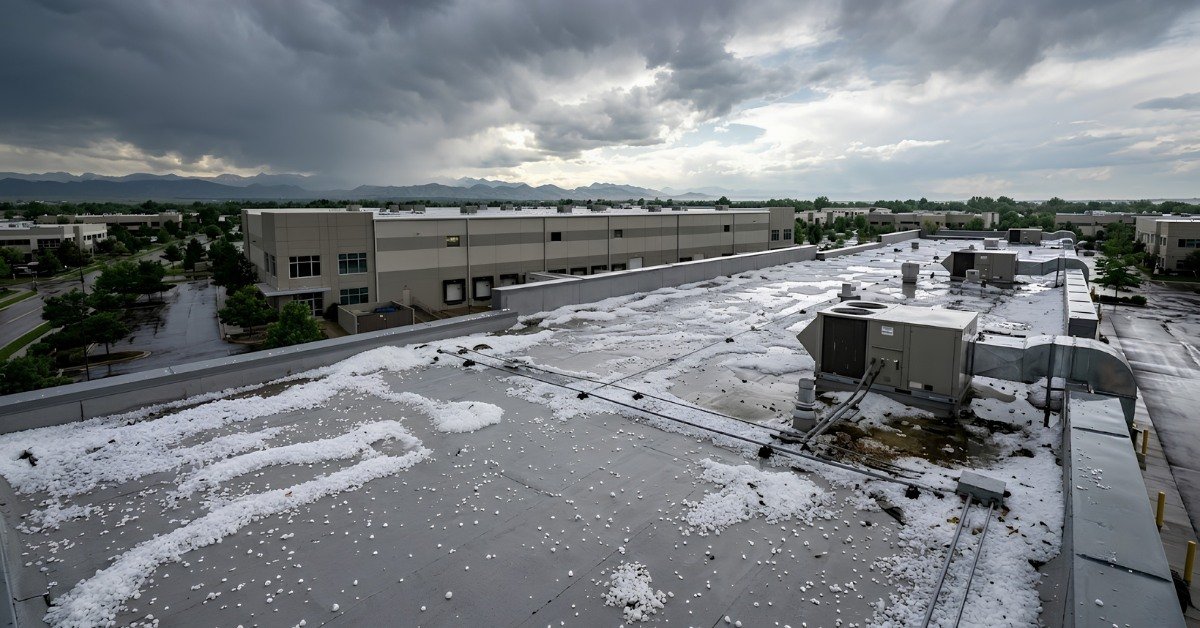
If you own a commercial building anywhere along Colorado’s Front Range, hail is the single most likely event to put a serious dent in both your property and your income this summer. Colorado’s 2026 hail season is already active, with large hail reported across the state in early July, and the Denver metro sits in the heart of what meteorologists call Hail Alley. Two more hailstorms hit the metro in mid-August, and Colorado’s new roof grant law doesn’t cover what either one did to a commercial building. Here is what every business owner should understand before the next storm: your commercial property policy almost certainly covers hail damage, but the size of your out of pocket cost depends on a deductible most owners never think about until a claim lands. Hail is the most expensive insured catastrophe in Colorado, and a single storm can shut a business down for weeks. Knowing how your coverage responds now, before the sky turns green, is the difference between a manageable repair and a genuine cash flow crisis.
I place a lot of commercial property policies for Denver area businesses, and the same conversation comes up every year. Owners assume hail is a homeowner problem. In Colorado, it is a serious business problem.
How hail hits Colorado businesses harder than most owners expect
The Rocky Mountain Insurance Information Association ranks hail as the most expensive insured catastrophe in the state, and Colorado sits second in the nation for hail claims, behind only Texas. The Front Range falls inside Hail Alley, which sees the highest frequency of large hail anywhere in North America. Our season runs from roughly mid April through mid September and peaks in June.
A commercial building gives hail a much larger target than a house: a wide flat or low slope roof, rooftop HVAC units, skylights, storefront glass, signage, and often fleet vehicles in the lot. Contractors and trades feel this acutely, since their trucks, trailers, and equipment sit exposed on jobsites all day. If that describes your operation, dedicated contractor coverage is worth reviewing before a storm, not after.
The May 2017 storm that struck the Denver metro remains the costliest catastrophe in state history at roughly 2.3 billion dollars in insured losses, and it forced the Colorado Mills mall to close for months. That is the part owners underestimate. The repair bill is one problem. The lost income while your doors are closed is another, and business interruption coverage is what stands between a covered hail event and payroll you still owe with no revenue coming in.
The wind and hail deductible that catches business owners off guard
Here is the detail I wish every client knew before signing. Many Colorado commercial property policies now carry a separate wind and hail deductible written as a percentage of your building’s insured value, not a flat dollar amount. Those percentages commonly run from one to five percent.
Run the math and it gets real fast. A two percent deductible on a building insured for two million dollars means you pay the first forty thousand dollars of any hail claim yourself. Most owners believe they carry a flat deductible of a few thousand dollars, because that is what applies to every other claim. Seeing the percentage number for the first time after a storm is a bad surprise at the worst possible moment.
You can plan for this. Know your number today, confirm it is a percentage you can absorb, and make sure the rest of your commercial property insurance carries the weight the deductible does not. Whether that roof gets rebuilt at full cost or paid out at depreciated value comes down to your replacement cost coverage, worth understanding before a claim, not during one. That is a five minute conversation now and an expensive lesson later.
What to do in the first 48 hours after a hail event
Once a storm passes, move quickly but in order. Wait until the hail fully stops, then document everything: the roof, rooftop units, vehicles, glass, and signage, with dates noted. Report the claim to your broker or carrier promptly, since Colorado has clear rules on timely claim handling. Get an inspection from a reputable, established contractor, and be wary of the storm chasing crews that flood the Front Range after every event. The No Roof Scams campaign exists because hail season is also fraud season here.
You also have real leverage if your insurer does not treat you fairly. Under Colorado law, specifically C.R.S. 10-3-1115 and 10-3-1116, a business whose claim is unreasonably delayed or denied can recover two times the covered benefit, plus reasonable attorney fees and court costs. That statute exists to keep insurers honest, and it applies to commercial property owners, not just homeowners.
Where a Broker Helps After a Colorado Hail Claim
A hail claim moves fast, and knowing your deductible and your filing window before the storm hits is what actually protects your payout. As an independent broker based in Centennial, my job is to shop multiple carriers on your behalf and explain what actually matters before you buy. I make sure you understand your wind and hail deductible in plain terms, that your business interruption limits reflect how long a real closure could last, and that your business insurance fits Colorado’s specific exposures. When a claim comes, having someone who knows your policy and will advocate for you is worth far more than a slightly cheaper premium bought online.
Hail is coming again this season. It always does. The businesses that come through it in good shape are the ones that got their coverage right before the storm, not the ones scrambling after.
Frequently Asked Questions
Does commercial property insurance cover hail damage in Colorado?
Yes. Standard commercial property insurance in Colorado covers hail damage to your building, roof, rooftop equipment, and business personal property, and business interruption coverage can replace income lost while your business is closed for repairs. The amount you pay out of pocket depends on your deductible, and many Colorado policies apply a separate percentage based wind and hail deductible to these claims.
What is a wind and hail deductible?
A wind and hail deductible is a separate deductible that applies specifically to wind and hail claims, and in Colorado it is often calculated as a percentage of your building’s insured value rather than a flat dollar amount. On a two million dollar building, a two percent wind and hail deductible means you pay the first forty thousand dollars of a hail claim before your coverage responds.
What can I do if my insurer unreasonably denies or delays my hail claim?
Under Colorado law, C.R.S. sections 10-3-1115 and 10-3-1116, a business whose insurance claim is unreasonably delayed or denied may bring an action to recover two times the covered benefit, plus reasonable attorney fees and court costs. This protection applies to commercial property owners, and it is one reason to document your claim carefully and work with a broker who will advocate on your behalf.