


By Rob Whittet, Agency Partner | CO License #342852
Three Denver-area businesses were issued more than $8 million combined in fines by Immigration and Customs Enforcement earlier this year for employing unauthorized workers, and the enforcement environment that produced those penalties has intensified considerably since then. Colorado employers in construction, restaurants, landscaping, janitorial services, and light manufacturing are operating in a worksite enforcement climate unlike anything most business owners have seen in the past decade. The question most have not yet asked is straightforward: if an ICE audit or worksite action affects your business, what does your insurance actually cover, and where does it leave you exposed?
This is not a political piece. It is a practical insurance review for Colorado employers who want to understand their financial exposure and close coverage gaps before something forces the issue.
What Is Happening With ICE Worksite Enforcement in 2026
ICE conducted over 12,000 Form I-9 audits in 2025, a tenfold increase compared to 2024, and enforcement activity has continued at elevated levels into 2026. The agency issued an updated Form I-9 inspection fact sheet in March 2026 that reclassified numerous common errors previously treated as minor and correctable as substantive violations subject to immediate fines with no cure period.
Before March 2026, if an inspection found a technical paperwork error on a Form I-9, the employer had a ten-business-day window to correct it. Under the updated guidance, more than ten categories of errors previously treated as correctable now generate a fine the moment the inspector identifies them. There is no opportunity to fix the problem first.
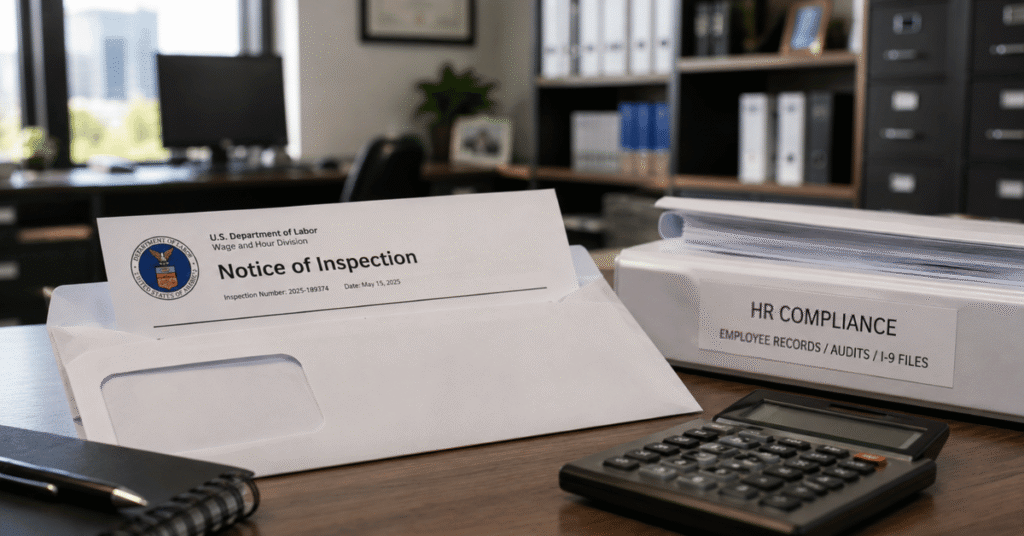
Colorado has already seen this play out. The Denver businesses fined earlier this year received penalties from I-9 audits, not dramatic physical raids. The process starts quietly, with a Notice of Inspection giving the employer 72 hours to produce records. Employers who have not conducted an internal audit in recent years are consistently surprised by what that process reveals.
ICE I-9 Civil Penalty Schedule — Current 2026 Figures (8 CFR § 274a.10)
| Violation Type | First Offense | Second Offense | Third+ Offense |
|---|---|---|---|
| Paperwork / substantive form errors | $288 – $2,861 per form | $288 – $2,861 per form | $288 – $2,861 per form |
| Knowingly hiring unauthorized workers | $716 – $5,721 per worker | $5,721 – $14,305 per worker | $8,582 – $28,619 per worker |
| Document fraud | $590 – $4,730 per document | $4,730 – $11,823 per document | $4,730 – $11,823 per document |
Fines are assessed per form, not per audit. A business with 60 employees and a ten percent error rate faces paperwork fines alone ranging from roughly $1,700 to more than $17,000 before any unauthorized-worker findings are considered. Criminal prosecution, including fines up to $3,000 per unauthorized worker and up to six months imprisonment for a pattern of violations, is also on the table for repeat offenders.
What Your Insurance Covers and What It Does Not
This is what most Colorado employers in affected industries need to understand, because there are persistent misconceptions about which policies respond to which events.
At a Glance: What Insurance Responds to an ICE Worksite Action
| Coverage Type | Covers ICE Fines? | Covers Employee Civil Claims? | Notes |
|---|---|---|---|
| General Liability | No | No | Covers third-party bodily injury and property damage only |
| Business Owner’s Policy | No | No | GL + property combined — same exclusions apply |
| Commercial Umbrella | No | No | Extends underlying limits — does not broaden covered events |
| Workers Compensation | No | No | Covers injured employees — obligation continues regardless of ICE action |
| EPLI | No | May | Designed to respond to wrongful termination and discrimination civil claims |
| Business Interruption | No | No | Requires a covered physical loss event — ICE action does not qualify |
Government fines and penalties are not covered by any standard commercial insurance policy. The I-9 civil penalties above come directly out of the business’s operating funds. This is non-negotiable and consistent across every standard commercial policy form.
Employment Practices Liability Insurance (EPLI) may cover related civil claims from employees. If employees are terminated following a worksite action and subsequently file civil claims alleging wrongful termination, discrimination, or retaliation, EPLI is the coverage designed to respond. It covers legal defense costs and, when applicable, settlements and judgments. Without an EPLI policy, the employer absorbs those costs on top of whatever government fines were assessed. EPLI is not included in a standard business owner’s policy or general liability coverage. It is purchased separately or added as an endorsement. Many Colorado small businesses in the most targeted industries do not carry it. Colorado employers who want to understand their coverage options can review our guide to employment practices liability insurance in Colorado.
Workers compensation insurance continues to cover injured employees regardless of immigration status. Colorado workers compensation law does not distinguish between documented and undocumented employees. If a worker is injured on the job, workers compensation insurance covers that claim regardless of the worker’s immigration status. That obligation does not pause during or after an ICE action. Employers who experience an unexpected workforce disruption and then have a worker injury during that gap face direct personal liability for all injury costs.
Business interruption coverage requires a covered physical loss event. An ICE worksite action is not a physical loss event. Most standard business interruption forms would not respond. Some specialty endorsements and surplus lines policies include broader civil authority or governmental action coverage, but this is not standard and coverage language varies considerably.
The Colorado-Specific Legal Context in 2026
Colorado sits in a complicated position in the current national enforcement environment. Two bills passed in 2026 add legal complexity that Colorado employers need to understand before they face an enforcement situation.
HB 26-1276 extends civil liability to employers whose staff disclose a worker’s immigration status to federal authorities. In a worksite enforcement situation, an ICE officer may approach a manager or HR employee about specific workers. Under HB 26-1276, disclosing that information beyond what is legally compelled can expose the employer to civil liability. Standard commercial insurance does not cover this exposure without a specific endorsement.
Senate Bill 26-5, passed in May 2026 and awaiting the governor’s signature at time of writing, creates a state-court cause of action allowing Colorado residents to sue federal immigration officers for alleged constitutional violations during raids, arrests, and warrantless entries. If signed, employees who believe their constitutional rights were violated during a worksite action may pursue state-court remedies. An employer named in related litigation without EPLI coverage absorbs those defense costs directly.
Industries with the highest ICE enforcement exposure in Colorado include construction contractors and subcontractors, restaurant operators, janitorial and cleaning services, landscaping companies, and light manufacturing. These are also the industries where ICE has stated its 2026 enforcement focus most explicitly.
What Colorado Employers Should Do Right Now
| # | Action | Description |
|---|---|---|
| 1 | Conduct an internal I-9 audit | Before ICE does it for you. A self-audit conducted in good faith before a Notice of Inspection is served is a documented mitigating factor under ICE’s five-factor penalty matrix. Businesses that demonstrate prior compliance efforts receive lower penalties. Bring in immigration counsel if your HR capacity does not include I-9 expertise. |
| 2 | Review your EPLI coverage | If you do not carry Employment Practices Liability Insurance, get a quote now. For Colorado small businesses in targeted industries, annual EPLI premiums typically run from a few hundred to a couple of thousand dollars depending on employee count and prior claims. A single employment lawsuit can cost multiples of that annual premium in defense costs alone. |
| 3 | Confirm workers compensation is current and fully reported | An unexpected workforce disruption reveals gaps in workers comp reporting. Confirm your policy is current on payroll, all workers are properly classified, and coverage limits reflect your actual workforce. |
| 4 | Establish an ICE inspection response protocol | Designate one person as the point of contact. That person should know to request identification, ask to see any warrant, and contact legal counsel immediately. Managers without this training are more likely to voluntarily disclose information beyond what is legally required — exactly what HB 26-1276 creates liability for. |
| 5 | Talk to an independent broker about your full coverage picture | A broker who works with Colorado employers in affected industries can review your general liability coverage, workers compensation, EPLI, and commercial umbrella positions together and identify gaps before a notice forces the conversation. There is no cost to that review. |
Frequently Asked Questions
Do government fines from an ICE I-9 audit get covered by business insurance?
No. Civil monetary penalties issued by the federal government for I-9 violations are not covered by any standard commercial insurance policy, including general liability, business owner’s policy, or commercial umbrella coverage. EPLI covers civil claims from employees — not government-imposed fines. These penalties come directly out of the business’s finances.
What is EPLI and why do Colorado employers in affected industries need it?
Employment Practices Liability Insurance covers legal defense costs and settlements when an employee, former employee, or job applicant files a civil claim for wrongful termination, discrimination, harassment, or retaliation. Employers in construction, restaurants, and similar industries face these claims at higher rates than the general business population and are simultaneously among the industries most targeted by ICE enforcement in 2026.
What happens to my workers compensation obligation if an ICE action disrupts my workforce?
Your workers compensation obligation does not change. Colorado law requires coverage for every employer with one or more employees, and that obligation applies to every covered worker injured on the job regardless of immigration status. An employer who experiences a workforce disruption and then faces a worker injury during a coverage gap is personally liable for all injury costs plus potential daily fines for non-compliance.
Does a commercial umbrella policy cover ICE-related losses?
A commercial umbrella policy increases the coverage limits of the underlying liability policies it sits above but does not change what events those policies cover. EPLI is a separate line of coverage requiring its own policy.
What should I do the moment I receive a Notice of Inspection?
Do not delay and do not volunteer information beyond what is legally required. Employers have 72 hours to produce I-9 records. Contact immigration legal counsel immediately. Simultaneously contact your insurance broker to confirm what coverage is in place and whether any endorsements apply. Document every interaction from the moment the notice arrives.
Are employers required to carry EPLI in Colorado?
Colorado does not require it by law. However, employers without EPLI absorb all defense costs, settlements, and judgments from employment-related civil claims directly. For small and mid-size businesses, a single employment lawsuit can cost more than the annual EPLI premium many times over.